
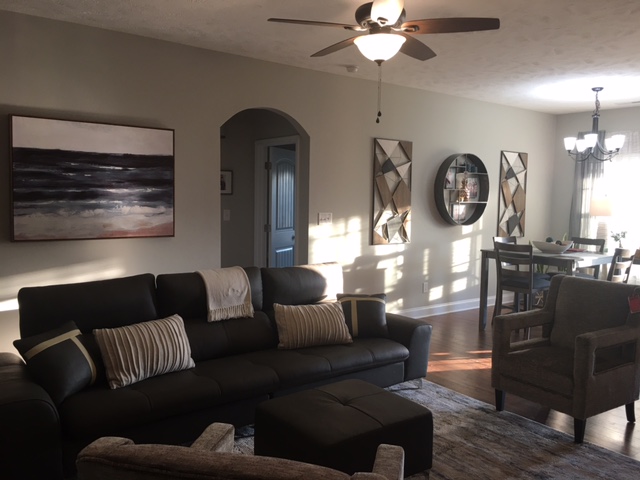
Moving into a new Fayetteville home can feel like a race between excitement and cardboard boxes. Before every dish is put away or every closet is organized, a few smart home design decisions can make your new space feel settled, intentional, and distinctly yours.
The key is not decorating every room immediately. It is creating a clear plan for the spaces, furniture, colors, and finishing touches that will have the biggest impact first.
Quick answer: You can style a new home before you finish unpacking by establishing the room layouts, choosing a consistent color direction, placing major furniture first, and prioritizing the rooms you use every day. In Fayetteville, it also helps to consider how your home’s layout, natural light, architecture, and connection to outdoor spaces influence your choices. A thoughtful order of operations keeps you from buying pieces too quickly or decorating around temporary clutter.
What local homeowners should know
-
Measure each room and major furniture piece before deciding where anything belongs.
-
Homes in established areas such as Haymount and VanStory Hills may call for different design solutions than newer construction elsewhere in Cumberland County.
-
Unpack and style the most-used rooms first instead of trying to complete the entire house simultaneously.
-
Fayetteville’s warm, humid seasons make durable, comfortable fabrics and practical entry areas especially useful.
-
Leave room for your design to evolve after you have lived in the house and learned how you actually use it.
Why Styling Your New Home Early Matters in Fayetteville
Styling your new home early matters because the first furniture and layout decisions often determine how comfortable, functional, and cohesive the house will feel later. A simple design plan can prevent rushed purchases, awkward room arrangements, and weeks of moving furniture from one wall to another after you thought the move was finished.
Fayetteville offers a wide variety of home styles and neighborhoods. A traditional home near Haymount may have defined rooms, architectural details, and established landscaping, while a newer property closer to expanding residential areas may feature a more open floor plan.
Those differences affect furniture scale, lighting, color placement, and how you create separation between living spaces.
Anne Monje Designs can help homeowners approach those decisions with a complete vision instead of treating each purchase as a separate decorating choice. From here, we focus on creating rooms that work together while still supporting the way you want to live in your new home.
Start With the Rooms You Need Most
Starting with the rooms you need most gives your new home an immediate sense of order without requiring you to finish every space at once. Focus first on the bedroom, main living area, kitchen or dining space, and entry because these rooms affect your daily routine from the moment you move in.
Get the bed positioned and dressed so you have a comfortable place to end the day. Then establish the main seating arrangement in the living room.
If your home has an open living and dining layout, avoid automatically pushing every piece against a wall. Rugs, lighting, furniture placement, and console tables can visually define separate zones while keeping the space connected.
Even with boxes nearby, one finished seating area can make the entire house feel more welcoming.
Design Around the Home You Actually Bought
Designing around the home you actually bought means responding to its architecture, proportions, light, and existing finishes rather than forcing an inspiration photo into a space where it does not belong. Your new home should influence the design plan just as much as your preferred colors, furniture styles, and accessories.
For example, an older home near downtown or the Terry Sanford area may have smaller rooms, original architectural details, or distinctive window placement. An open-plan home may require larger-scale furniture and more deliberate visual zones.
Walk through the house at different times of day before finalizing paint or window treatments. Notice where sunlight is strongest, which rooms feel darker, and which views you want to emphasize.
Those observations are often more valuable than making decorating decisions from an empty-room photograph.
Local Design Observations for New Fayetteville Homes
Local design observations for new Fayetteville homes point to the value of balancing polished interiors with practical everyday living. The area’s warm seasons, military-connected moves, varied housing stock, and mix of established and newer neighborhoods make flexible layouts, durable materials, and a well-planned move-in sequence especially useful.
No project-specific field data was provided for this article, so these are design-planning observations rather than claims about completed client projects.
Homes around Cumberland County often need to accommodate busy households, guests, pets, work-from-home needs, and changing family routines. Choosing versatile pieces can make a room easier to adapt without redesigning it every time life changes.
Place Major Furniture Before Opening Every Box
Placing major furniture before opening every box gives each room a structure and tells you where smaller belongings should eventually go. Position beds, sofas, dining tables, dressers, desks, and large storage pieces first, then evaluate the walking paths and proportions before unpacking accessories.
Ask a few practical questions as you work:
-
Can people move comfortably through the room?
-
Does the furniture block a doorway, window, or natural focal point?
-
Is the seating arranged for conversation as well as television viewing?
-
Does the room feel balanced rather than heavy on one side?
-
Are frequently used items easy to reach?
A good furniture layout can make an average-sized room feel considerably more comfortable without adding a single decorative object.
Warning Signs You Are Decorating Too Quickly
Warning signs that you are decorating too quickly include buying pieces without measurements, trying to fill every empty wall, and making permanent decisions before understanding the new house. Moving creates a natural urge to make everything look finished, but giving certain decisions a little time often produces a more cohesive result.
Watch for these common signs:
-
You are ordering furniture simply because a room looks empty.
-
Several new pieces compete for attention instead of working together.
-
Rugs are being purchased before the furniture arrangement is settled.
-
Artwork is going up before you know which furniture will remain on each wall.
-
You are choosing paint based only on a small sample.
-
Temporary storage is becoming part of the permanent room design.
-
You are recreating the layout from your previous home even though the new floor plan is different.
When to Bring in a Professional Designer
Bringing in a professional designer is especially useful when you need a whole-home direction, have difficult room proportions, or want to avoid expensive purchasing mistakes. You can safely experiment with accessories and small furniture on your own, but larger layout, color, furnishing, and finish decisions can benefit from an experienced design perspective.
Professional guidance can be particularly valuable when you are moving into a home with several connected spaces that need to feel cohesive.
Instead of choosing a sofa, rug, lighting, paint, and artwork independently, a designer can help establish how those elements should relate to one another before purchases begin.
Common Causes of a Home Feeling Unfinished
The most common causes of a home feeling unfinished are incorrect scale, inconsistent colors, incomplete lighting, bare windows, and rooms filled with unrelated purchases. Boxes may make the problem more noticeable, but the real issue is usually the absence of a clear visual hierarchy and an intentional connection between rooms.
A large Fayetteville living room, for example, can feel sparse even when it contains plenty of furniture if the rug is too small or the seating is spread too far apart.
Smaller rooms can have the opposite problem. Too many individual pieces can make the space feel crowded before you have even finished unpacking.
Create a Color Story Before You Shop
Creating a color story before you shop helps new furniture, textiles, artwork, and accessories feel connected instead of collected at random. You do not need to use the same colors in every room, but repeating a few related tones throughout the house creates continuity and makes transitions between spaces feel intentional.
Start with permanent or expensive elements that are staying, such as flooring, countertops, cabinetry, or a favorite sofa.
From there, identify a simple palette of neutrals, supporting colors, and accents. Test colors in the actual rooms because Fayetteville sunlight can affect how paint and fabrics appear throughout the day.
Common Decorating Mistakes After a Move
Common decorating mistakes after a move usually happen when the desire to finish quickly becomes more important than scale, function, and long-term flexibility. A better approach is to make the large decisions deliberately and allow accessories and smaller details to develop after you understand your new routines.
Mistake: Buying everything during the first week.
Consequence: The home can feel coordinated by shopping trip rather than thoughtfully designed.
Better approach: Establish the essential pieces, then fill gaps intentionally.
Mistake: Using furniture only because it fit the previous house.
Consequence: A piece may overwhelm a smaller room or disappear in a larger one.
Better approach: Measure the new rooms and reevaluate each item.
Mistake: Decorating around moving boxes.
Consequence: Temporary pathways and storage zones can lead to poor layouts.
Better approach: Determine the room’s ideal circulation first.
A Common Fayetteville Move-In Scenario
A common Fayetteville move-in scenario is a household arriving with furniture from a previous home that does not quite fit the scale or layout of the new property. The sofa stays because it is familiar, boxes collect along the walls, and new accessories are purchased before anyone has decided what the room really needs.
A more effective sequence is to identify what works, remove what does not, establish the furniture plan, and then choose the missing pieces.
This approach can be useful whether you are settling near Fort Bragg, moving into an established Cumberland County neighborhood, or relocating to nearby Hope Mills.
Related Interior Design Solutions
Related interior design solutions can help turn a collection of rooms and belongings into a home with a consistent point of view. Depending on your project, professional guidance may include help with furniture placement, room planning, color selections, furnishings, lighting, textiles, accessories, and other design decisions appropriate to your space.
Comparing DIY Decorating and Professional Design
DIY decorating offers flexibility and hands-on control, while professional design provides a coordinated plan for homeowners who want help making larger decisions confidently. The right choice depends on the scale of your project, the complexity of your rooms, and how comfortable you are evaluating furniture proportions, colors, materials, and layouts.
DIY may work well if you already own most of the right pieces and simply need to arrange and accessorize them.
Professional guidance becomes more valuable when several rooms need to coordinate, major purchases are involved, or you are unsure where to begin.
Service Areas
Our primary local focus is Fayetteville and homeowners in the surrounding area who want their new spaces to feel intentional from the start. Nearby communities such as Hope Mills and other parts of Cumberland County may also be relevant depending on the service area.
The Cost of Rushing the Design Process
The cost of rushing the design process is often measured in wrong-size furniture, duplicate purchases, repainting, replacement décor, and rooms that still do not function well after the boxes disappear. Taking time to create a plan can reduce unnecessary purchases and make each decision contribute to the larger vision for your home.
That does not mean living with empty rooms for months. It means finishing the right things in the right order.
Frequently Asked Questions
How soon should I decorate after moving into a Fayetteville home?
You can begin decorating immediately, but focus first on layout and essential furnishings rather than trying to complete every decorative detail. Spend enough time in the home to understand the light, traffic patterns, storage needs, and how you actually use each room before making expensive or highly permanent decisions.
What should I unpack first in a new Fayetteville house?
Unpack the items that support sleeping, eating, bathing, and comfortable everyday living first. Once those essentials are handled, concentrate on the main bedroom, living area, kitchen, and entry. Creating a few functional, visually calm spaces will usually make the remaining unpacking process feel much more manageable.
Should I paint my Fayetteville home before moving furniture in?
Painting before major furniture arrives can be convenient, but only if you are confident about the colors. If you have not observed the home’s natural light throughout the day or compared paint with existing floors and finishes, living with the space briefly may lead to a more informed choice.
How do I make an older Cumberland County home feel updated?
An older Cumberland County home can feel updated without removing every traditional feature. Thoughtful paint, lighting, appropriately scaled furniture, refreshed textiles, and a simplified color palette can introduce a current feel while allowing original details and established architectural character to remain part of the home’s personality.
How can I make an open-concept home feel finished before I am fully unpacked?
Use furniture placement, rugs, lighting, and repeated colors to define individual areas within the larger space. Establish the primary seating and dining zones first, then keep unnecessary boxes away from those areas. Even one intentionally arranged section can make an open room feel settled while unpacking continues elsewhere.
What decorating style works best for homes near Haymount?
The best decorating style for a Haymount home is one that responds to the individual property rather than applying a single neighborhood-wide formula. Many homeowners may choose to respect traditional architectural details while introducing updated furniture, lighting, textiles, or art, but the home’s actual features should guide those decisions.
Should I buy new furniture before moving to Fayetteville?
Buy new furniture before the move only when you have reliable measurements and understand the new floor plan. Otherwise, waiting can prevent costly scale mistakes. A sofa or dining table that worked beautifully in your previous home may relate very differently to the dimensions and circulation of your new rooms.
Can an interior designer help if I already own most of my furniture?
Yes, design guidance can still be useful when you already own most of your furniture. The challenge may be deciding what belongs in each room, what should be removed or replaced, and which new pieces will connect everything visually. Existing furnishings can often become the starting point rather than an obstacle.
Make Your New Fayetteville Home Feel Finished From the Start
A beautifully settled home does not require every moving box to disappear first. With a clear plan for layout, color, furniture, lighting, and the rooms that matter most, your new space can begin feeling comfortable and intentional almost immediately.
Turn Your New House Into a Home That Feels Like You
We can help you make thoughtful design decisions before rushed purchases and temporary arrangements take over.